Seahurst sits in Burien within King County where Pacific Northwest winters bring repeated heavy rain that soaks through older roof decks and finds its way into attics. Many homes here date to the 1950s through 1970s with limited ridge venting and insulation that holds moisture against roof sheathing. When that moisture stays trapped, mold colonies form along rafters and in insulation batts that homeowners rarely see until a ceiling stain appears or an inspector flags it during a sale.
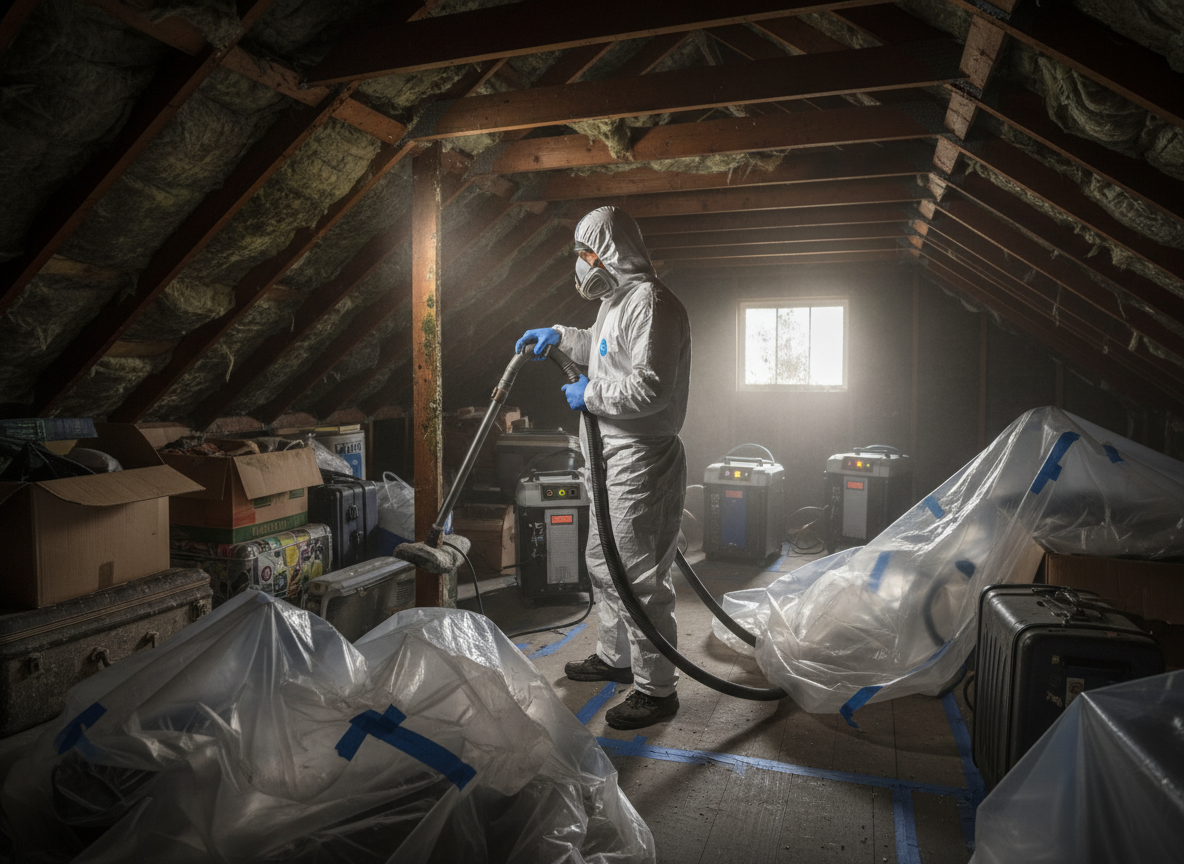
Remediation starts with containment using plastic barriers and negative air machines to keep spores from drifting into living spaces. Technicians remove wet insulation, treat rafters with EPA-registered antimicrobials, and dry the cavity with commercial dehumidifiers sized for the attic volume. In Seahurst homes with knob-and-tube wiring or single-layer roof decking, extra care is taken to avoid disturbing electrical lines or creating new leak paths during material removal.
After drying, crews reinstall insulation to current R-value standards and improve ventilation by adding intake vents or a powered exhaust fan when the existing system proves inadequate for the local climate. Final clearance testing confirms spore counts match outdoor levels before the space is returned to service. Skipping ventilation upgrades in this rainy corridor often leads to repeat growth within two seasons.
Technician insight
In Seahurst, the thing that catches most people out with attic mold remediation is how 1960s split-levels with low-slope roofs and minimal soffit venting trap winter rain runoff under insulation for months before anyone notices.
Hidden Growth Above a Seahurst Bedroom
A homeowner in Seahurst noticed a faint ceiling stain after weeks of steady rain. We found saturated insulation and black mold along rafters where a flashing leak had gone unnoticed for two seasons. After removing wet material, treating the wood, and adding ridge venting, moisture levels stayed low and the ceiling was repaired without further growth.
How it works
- 1
Inspection and Moisture Mapping
Technicians access the attic through existing openings or small inspection ports, use moisture meters on sheathing and rafters, and document visible growth and water entry points.
- 2
Containment and Removal
Plastic sheeting and negative air machines isolate the work area; affected insulation and heavily contaminated wood sections are bagged and removed while surfaces are HEPA-vacuumed.
- 3
Treatment and Drying
Antimicrobial agents are applied to rafters and sheathing; commercial air movers and dehumidifiers run until moisture readings fall below 12 percent.
- 4
Ventilation Upgrade and Clearance
Additional soffit or ridge vents are installed where needed, new insulation is placed, and independent air sampling confirms the space meets post-remediation standards.
Pricing
Cost depends on attic size, extent of growth, and whether ventilation upgrades are required; we provide upfront written quotes after inspection.