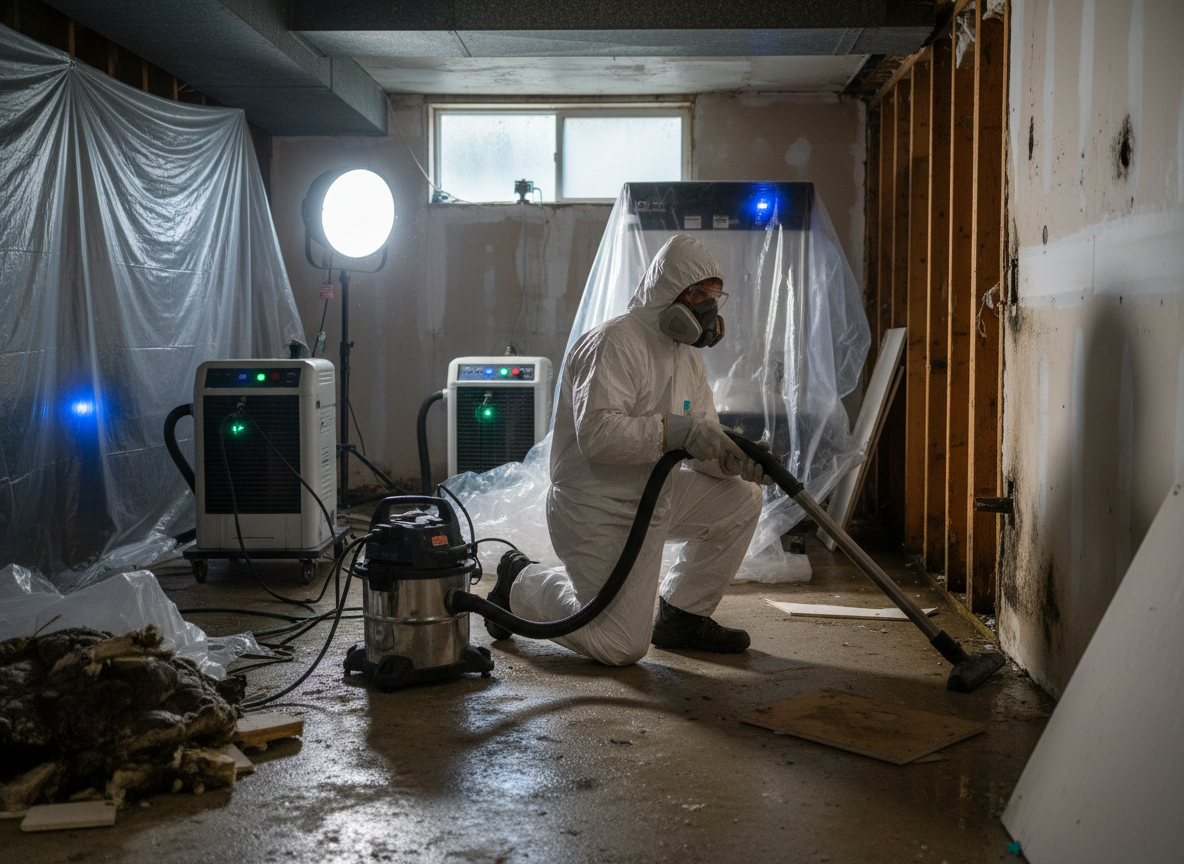
Seahurst homes often date to the 1950s and 1960s with crawl spaces and unvented attics that trap moisture after prolonged winter rains. When roof leaks or plumbing failures introduce water, mold colonies establish quickly behind drywall and under subfloors. Remediation requires mapping moisture with infrared tools, then isolating affected zones before any demolition to prevent spore migration into living areas. Failure to locate the original water entry point, such as a compromised foundation drain along Ambaum Boulevard properties, allows recurrence within months.
Removal protocols differ for porous materials like insulation versus non-porous framing. In Seahurst’s damp climate, we extract saturated cellulose and treat wood with EPA-registered antimicrobials, followed by HEPA vacuuming of all surfaces. Negative air machines maintain containment while work proceeds, and we document each step with photos for insurance claims. Homeowners frequently overlook HVAC systems that can redistribute spores throughout the house if not cleaned and sealed during the process.
Post-remediation verification includes moisture readings below 12 percent and air sampling to confirm spore counts match outdoor baselines. We advise sealing foundation vents and improving grading around the structure to reduce future intrusion, especially on sloped lots near Seahurst Park where runoff concentrates. This approach prevents repeat calls that stem from incomplete drying rather than new leaks.
Technician insight
In Seahurst, the thing that catches most people out with Mold remediation after water damage is water trapped in the dirt floors of pre-1970 crawl spaces along 152nd Street; homeowners seal the vents thinking they are helping, but that just keeps the soil wet through another rainy season and lets colonies reform behind the insulation.
Hidden Crawl Space Growth After Roof Leak
A Seahurst homeowner noticed musty odors weeks after a winter roof repair. Inspection found standing water and black mold on joists under the bathroom. We isolated the crawl space, removed saturated insulation, treated the framing, and installed a vapor barrier with a small dehumidifier. Follow-up readings stayed dry through the next wet season.
How it works
- 1
Moisture Mapping and Source Identification
Technicians use thermal imaging and pin meters to locate hidden water in Seahurst crawl spaces and wall cavities, tracing back to roof penetrations or foundation cracks typical in the neighborhood.
- 2
Containment Setup
Plastic barriers and negative air pressure isolate the work zone, protecting adjacent rooms from spore spread during removal.
- 3
Material Removal and Treatment
Affected drywall, insulation, and carpet are removed; remaining surfaces receive antimicrobial application and HEPA cleaning.
- 4
Drying and Clearance Testing
Industrial dehumidifiers and air movers reduce moisture, followed by independent air sampling to verify safe conditions before reconstruction.
Pricing
Pricing varies by square footage affected, depth of hidden growth, and whether HVAC cleaning is required; detailed written estimates follow the initial inspection.