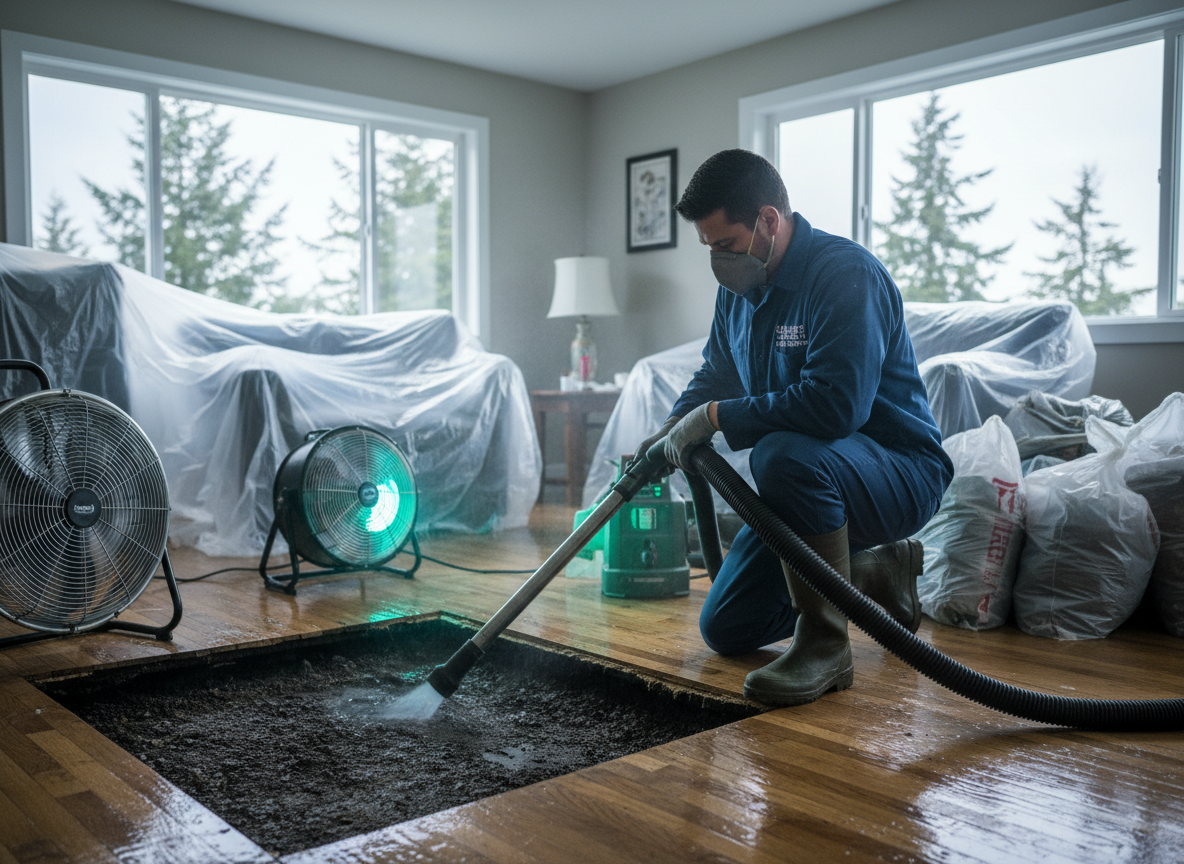
Seahurst homes built before the 1980s often have galvanized supply lines and cast-iron drains that corrode from decades of constant moisture. A pinhole leak behind a wall can run for weeks before staining appears, saturating plaster and subflooring. We trace lines with moisture meters and thermal imaging rather than guessing, then isolate the section so we do not open unnecessary drywall in tight 1950s-era layouts common along Ambaum and 1st Avenue.
Winter rain in the Seahurst area keeps soil saturated against foundation walls, pushing groundwater through any crack or pipe penetration. When a supply leak meets that already-wet slab, the moisture load multiplies and mold risk rises fast in crawl spaces that lack vapor barriers. Our crews pull baseboards, create negative air, and place drying equipment sized for the actual cubic footage instead of running fans on autopilot.
Hidden Leak Detection
We map supply and drain lines against original building plans before cutting, then confirm every wet pocket with pin and pinless meters so we do not miss pockets behind built-in cabinetry typical in Seahurst ramblers.
Drying and Monitoring
Equipment placement accounts for the closed floor plans and limited attic access in many local homes; we log daily moisture readings until readings match unaffected framing rather than stopping at a calendar date.
Technician insight
In Seahurst the thing that catches most people out with water leak restoration is how often a small supply-line pinhole sits right above a finished basement ceiling in the older homes along 4th Avenue SW. The leak runs for weeks, the ceiling soaks, and then the first sign is a brown stain that has already reached the carpet pad below. We end up removing far more material than the homeowner expected because the moisture traveled laterally between the joists.
Hidden Supply Leak in Seahurst Rambler
A homeowner on SW 148th noticed a musty smell near the laundry room. We traced the leak to a corroded copper elbow behind the wall that had been dripping into the crawl space for weeks. After isolating the line and drying the joists and subfloor, we confirmed all readings matched the rest of the house and released the space for drywall repair.
How it works
- 1
Arrival and Containment
Technician arrives, shuts off water at the meter if needed, and sets containment to keep any remaining moisture from spreading into unaffected rooms.
- 2
Source Location
We use moisture meters and thermal imaging to find the exact leak point without removing more material than necessary.
- 3
Water Removal and Drying
Standing water is extracted, then air movers and dehumidifiers are placed and adjusted daily until all affected wood and drywall reach dry standard.
- 4
Final Verification
Moisture readings are documented and compared to unaffected areas before we release the space for repairs.
Pricing
Upfront quotes given after inspection; final cost depends on how many rooms are affected and whether subfloor or cabinetry must be opened.