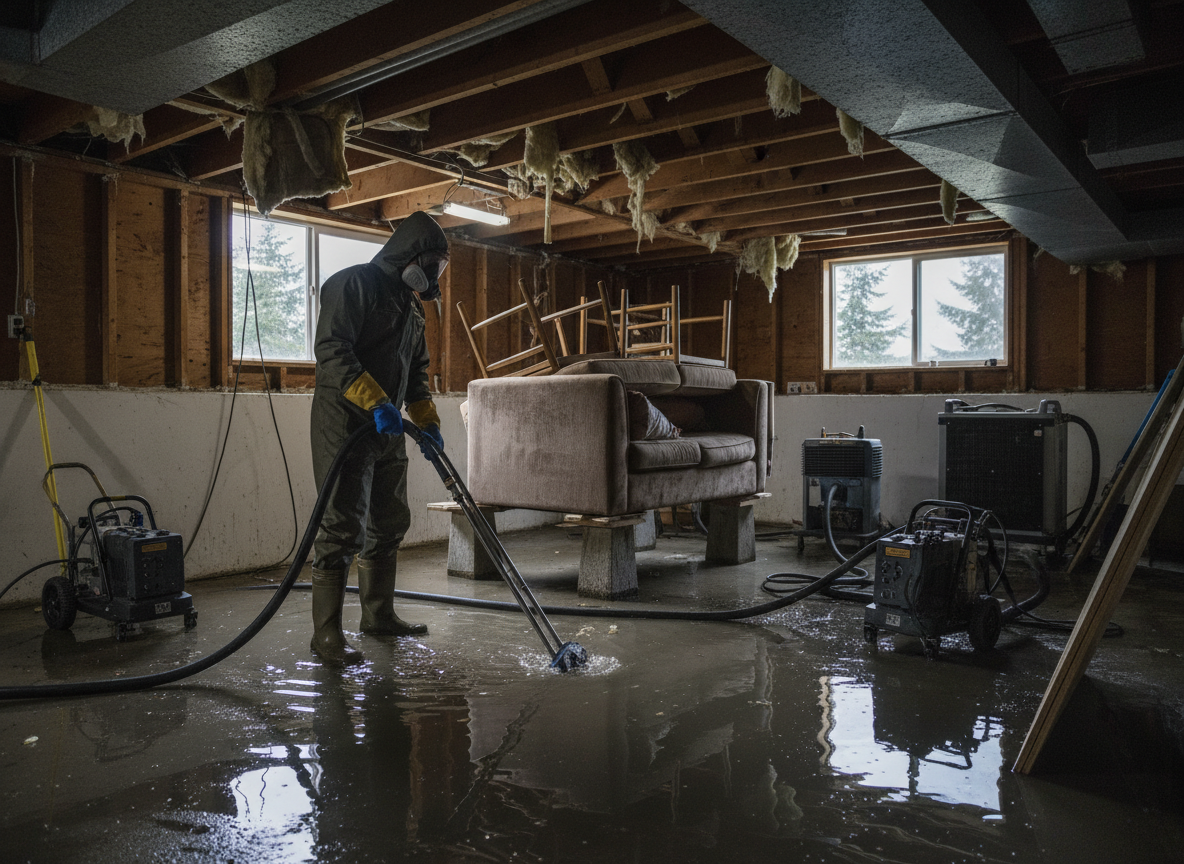
Emergency water cleanup begins with stopping the source and removing standing water before it migrates into subfloors or wall cavities common in Seahurst homes. Older housing stock along Ambaum and nearby streets often features slab-on-grade or crawlspace construction that lets water travel unseen, so technicians use moisture meters to map saturation rather than relying on visible signs alone. Delaying extraction allows moisture to reach insulation and electrical boxes, raising the risk of secondary damage that requires cutting and replacing materials rather than simple drying.
In Seahurst the terrain slopes toward Puget Sound in places, so runoff during storms can pool against foundations on streets like SW 152nd. Technicians extract water from carpets, hardwood, and tile, then set up air movers and dehumidifiers sized for the square footage while monitoring humidity levels to prevent warping or mold on remaining surfaces. Edge cases include water that reaches under built-in cabinetry or into HVAC returns, both of which need targeted drying to avoid hidden growth that only shows up weeks later.
Once visible water is gone, the focus shifts to documenting affected areas for insurance and confirming that moisture readings return to normal before any reconstruction. Homes near the water table can retain dampness longer, so follow-up visits check behind baseboards and under vinyl to catch pockets that standard fans miss. This step-by-step approach keeps the job contained to the original wet zones instead of turning into a larger rebuild.
Technician insight
In Seahurst, the thing that catches most people out with Emergency water cleanup is how water moves under the older slab foundations along streets like 4th Avenue SW, so visible puddles often hide saturation that travels into adjacent rooms and requires extra drying time.
Crawlspace Water Entry
Runoff entered a Seahurst crawlspace after a storm and wicked into subfloor insulation. We extracted the standing water, mapped moisture through the joists, and ran targeted drying until readings matched the rest of the structure, keeping the job from spreading into finished rooms above.
How it works
- 1
Source Control and Safety
Locate and stop the water source, then secure the area to prevent electrical hazards or slip risks.
- 2
Standing Water Extraction
Use pumps and wands to remove bulk water from floors and low areas before it spreads further.
- 3
Moisture Mapping
Scan walls, floors, and cavities with meters to identify hidden saturation typical in local crawlspaces and slabs.
- 4
Drying and Monitoring
Place equipment and return daily to adjust settings until readings match unaffected areas of the home.
Pricing
Upfront quotes after inspection; final cost depends on water volume, affected materials, and access to hidden areas.