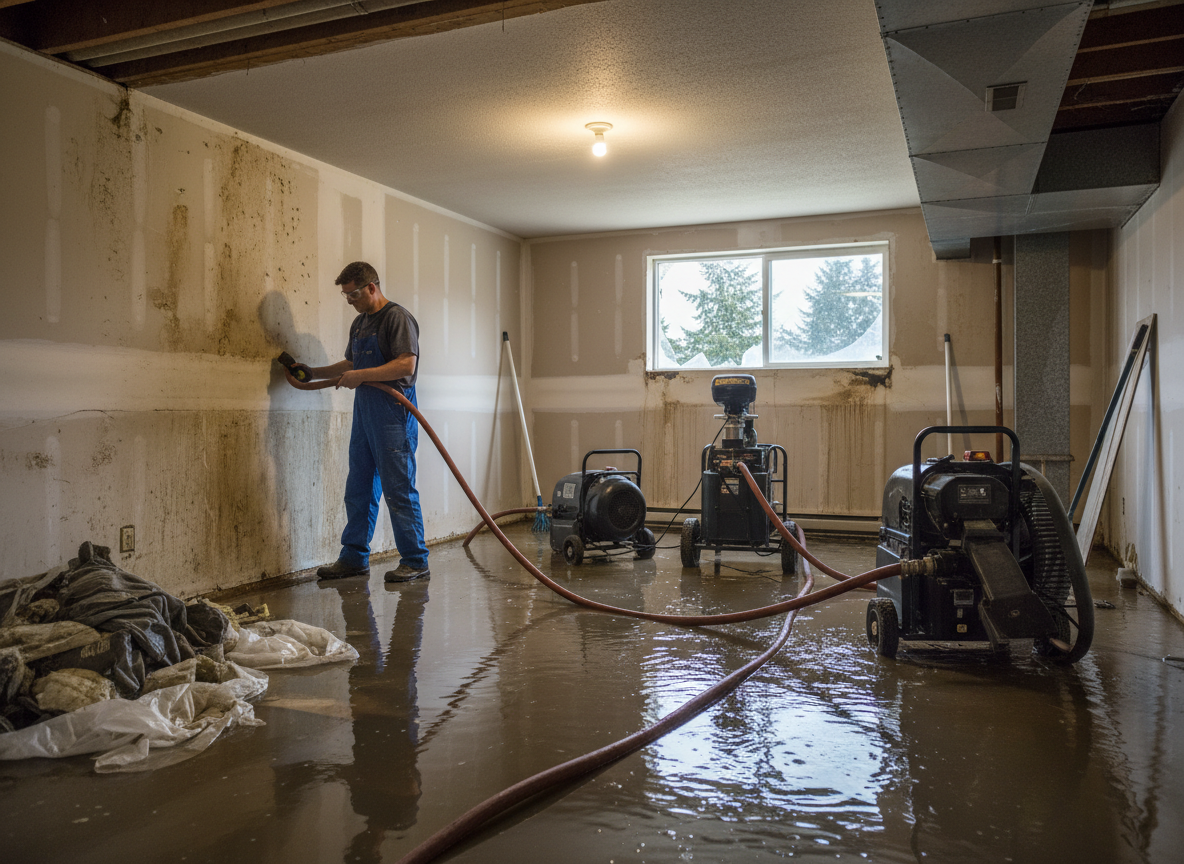
Water damage mitigation in Seahurst starts with locating and stopping the active water source, whether from roof leaks during heavy King County rains or burst pipes in older single-story homes near Ambaum Boulevard. Technicians then remove standing water with portable extractors suited to tight crawl spaces common in the area, followed by targeted drying using air movers and dehumidifiers placed to pull moisture from framing and subfloors without spreading it to unaffected rooms.
Seahurst homes built before the 1980s often have limited ventilation under the structure, so mitigation crews check for trapped moisture along the slope toward Puget Sound where water pools after storms. Edge cases include saturated insulation that must be cut out immediately to avoid hidden mold growth, and electrical hazards when water reaches outlets in finished basements. Proper documentation of moisture readings at multiple depths helps meet King County permitting requirements if structural repairs follow.
Mitigation also addresses secondary risks like warping hardwood floors or delamination of particleboard cabinets typical in local kitchens. Crews monitor relative humidity daily until levels stabilize below 50 percent, then advise homeowners on temporary ventilation strategies during the wet season. Skipping these steps in Seahurst’s climate often leads to recurring issues months later when spring rains return.
Technician insight
In Seahurst, the thing that catches most people out with water damage mitigation is how water travels under the slab or through the crawl space in post-war homes along the hill toward the water, staying hidden until it reaches interior walls days after the rain stops.
Crawl Space Saturation After Winter Storm
Heavy rain overwhelmed grading at a Seahurst residence and water entered the crawl space. We located pooled water against the foundation, extracted it, removed wet insulation, and ran drying equipment until readings dropped. The home stayed dry through the rest of the season with no mold return.
How it works
- 1
Source Identification
Inspect the property to find and stop the water entry point using moisture meters and visual checks of roofs, pipes, and grading around Seahurst homes.
- 2
Water Extraction
Remove standing water and saturated materials with truck-mounted and portable pumps suited to crawl spaces and tight layouts common in Burien and Seahurst.
- 3
Drying and Dehumidification
Place air movers and dehumidifiers, then monitor moisture levels daily until the structure reaches safe drying standards.
- 4
Final Verification
Re-check all affected areas with meters and provide a written report before returning the space to the homeowner.
Pricing
Upfront quotes based on inspection; costs vary with water volume, affected square footage, and access challenges in older Seahurst homes.