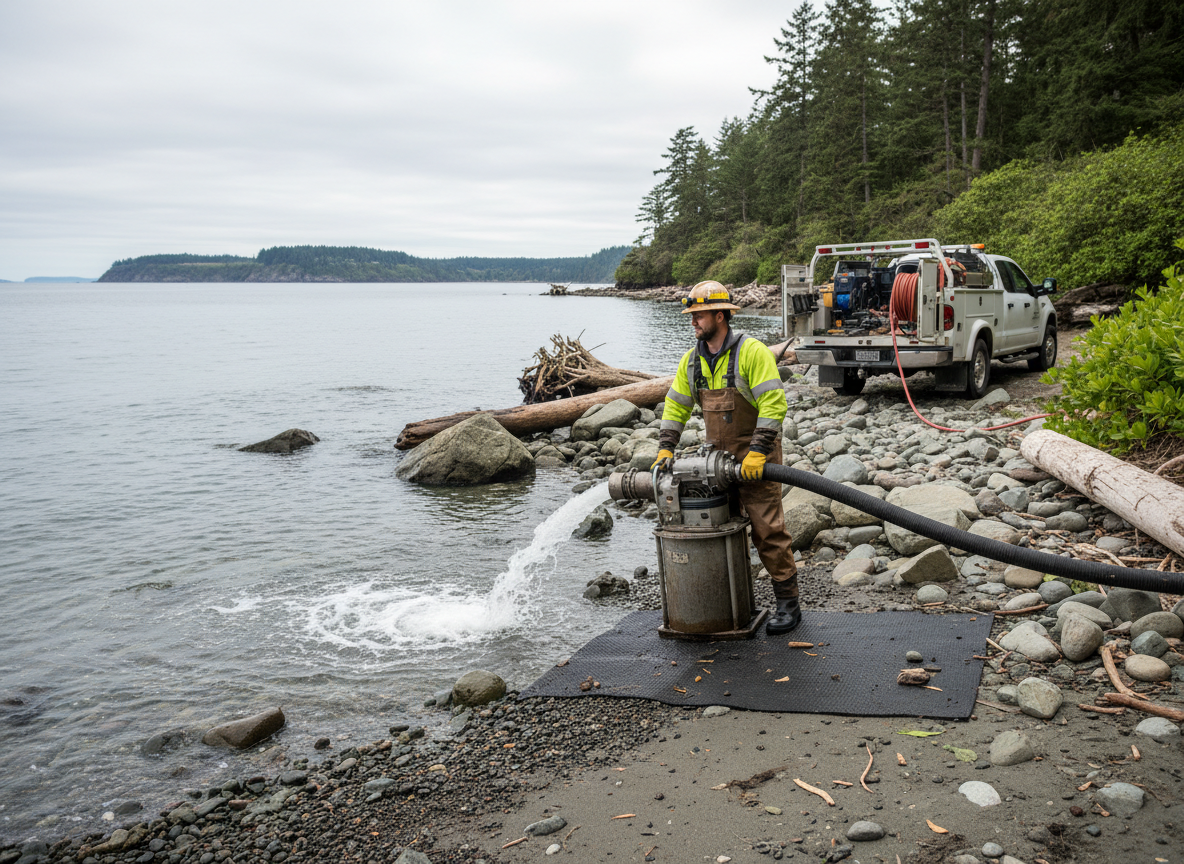
Water extraction in Seahurst often starts with hidden moisture trapped in crawl spaces common to 1950s-1970s homes along Ambaum Boulevard and 1st Avenue SW. These older foundations sit on clay-heavy soils that retain rainwater long after Puget Sound storms pass, so crews must pull carpet, pad, and baseboards quickly before mold sets in behind drywall. Truck-mounted vacuums rated for high volume handle the initial flood from roof leaks or failed sump pumps, while moisture meters map saturation that reaches into subfloor plywood.
King County code requires proper disposal of extracted water when it contains sewage or chemicals, so technicians route discharge lines away from storm drains near Seahurst Park. In low-lying pockets near the shoreline, tidal influence can push additional groundwater into basements during king tides combined with heavy rain, extending the extraction window. Technicians check for delamination in particleboard cabinets and underlayment that older Seahurst kitchens often contain, because these materials swell and buckle within hours of saturation.
Portable extractors supplement the main unit on upper floors where hose reach is limited, especially in split-level homes common along SW 148th Street. After bulk water removal, air movers and dehumidifiers are staged immediately to prevent secondary damage to hardwood floors that expand when moisture migrates from below. Homeowners are advised to shut off power to affected circuits before crews arrive, since standing water near outlets creates shock hazards in the damp climate.
Technician insight
In Seahurst, the thing that catches most people out with water extraction is how quickly groundwater rises through the clay soil after a big rain event near the shoreline; homeowners often think the floor is dry once the puddle is gone, but the slab and subfloor stay wet for days and need extraction lines run under cabinets that sit right on the concrete.
Seahurst Basement After Heavy Rain
A homeowner near SW 152nd Street called after water entered through a cracked foundation wall during a November storm. Extraction crews found six inches of standing water across the finished basement and elevated moisture in the particleboard underlayment. Truck-mounted vacuums cleared the bulk water in two hours, followed by targeted extraction under built-in shelving before drying equipment was placed.
How it works
- 1
Arrival and Assessment
Technician arrives within hours, locates entry points, and maps water depth with moisture meters across Seahurst homes.
- 2
Safety and Containment
Power is isolated where needed and containment barriers are set to prevent cross-contamination into unaffected rooms.
- 3
Bulk Extraction
Truck-mounted and portable vacuums remove standing water from floors, carpets, and hard surfaces.
- 4
Moisture Verification
Post-extraction readings confirm saturation levels before drying equipment is positioned for the next phase.
Pricing
Cost depends on water volume, number of affected rooms, and whether sewage or contamination is present.