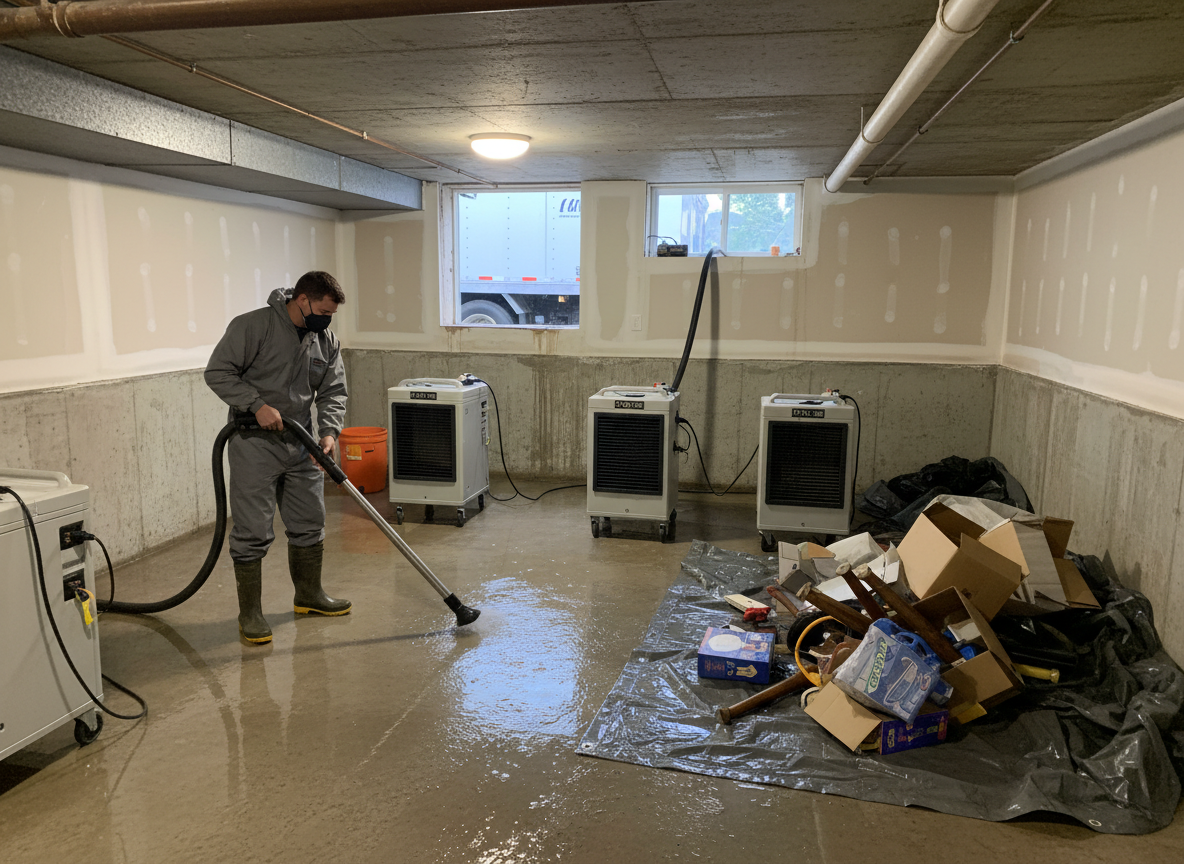
Seahurst sits in Burien within King County where winter rains often exceed two inches in a single day and older single-family homes built before 1970 sit on clay-rich glacial till that drains slowly. When water enters through foundation cracks or window wells it pools against the slab and wicks into drywall and carpet padding within hours. We begin by mapping moisture with infrared meters because surface drying alone leaves hidden saturation behind the base plates and under vinyl flooring common in these basements.
Extraction starts with submersible pumps rated for at least 50 gallons per minute followed by truck-mounted vacuums that pull water from under cabinets and behind stairs. Once standing water is gone we place commercial air movers and dehumidifiers sized to the cubic footage of the space rather than guessing. In Seahurst homes with finished basements we often have to cut out two feet of drywall to expose the sill plate for proper drying and to meet King County health guidelines on mold prevention after Category 3 water intrusion.
Secondary damage from sewage or gray water backups requires full containment and antimicrobial application because the area’s high water table can push contaminated groundwater back into the structure days later. We document every step with photos and moisture logs so homeowners can show insurers the work performed. Homeowners who skip professional drying often see recurring musty odors the next rainy season because the soil around the foundation never fully dries without mechanical intervention.
Technician insight
In Seahurst the thing that catches most people out with Basement flood cleanup is the clay-heavy glacial soil around pre-1970 homes that stays saturated for weeks after the rain stops, so if you only pull the carpet but leave the tack strip and underlayment the mold returns the next storm.
Winter Rain Flood in Seahurst Basement
Heavy December rain overwhelmed the foundation drain on a 1960s Seahurst home. Water entered through a cracked sill plate and soaked carpet and drywall on the north wall. We extracted the water, removed two feet of drywall, and ran drying equipment for four days until readings stabilized. The homeowner avoided mold growth and the space was ready for new flooring within a week.
How it works
- 1
On-Site Assessment
We arrive from our Burien location, locate the water source, test moisture levels in walls and flooring, and determine water category before any work begins.
- 2
Water Extraction
Pumps and vacuums remove standing water from the slab and behind fixtures, then we pull saturated carpet and padding for disposal.
- 3
Drying and Monitoring
Air movers and dehumidifiers run until moisture readings drop below 15 percent; we return daily to check progress and adjust equipment.
- 4
Sanitizing and Final Walk-Through
Affected surfaces receive antimicrobial treatment, then we walk the homeowner through the dried space and provide documentation for insurance.
Pricing
Upfront quotes after inspection; cost varies with water volume, square footage, and whether drywall or flooring must be removed.