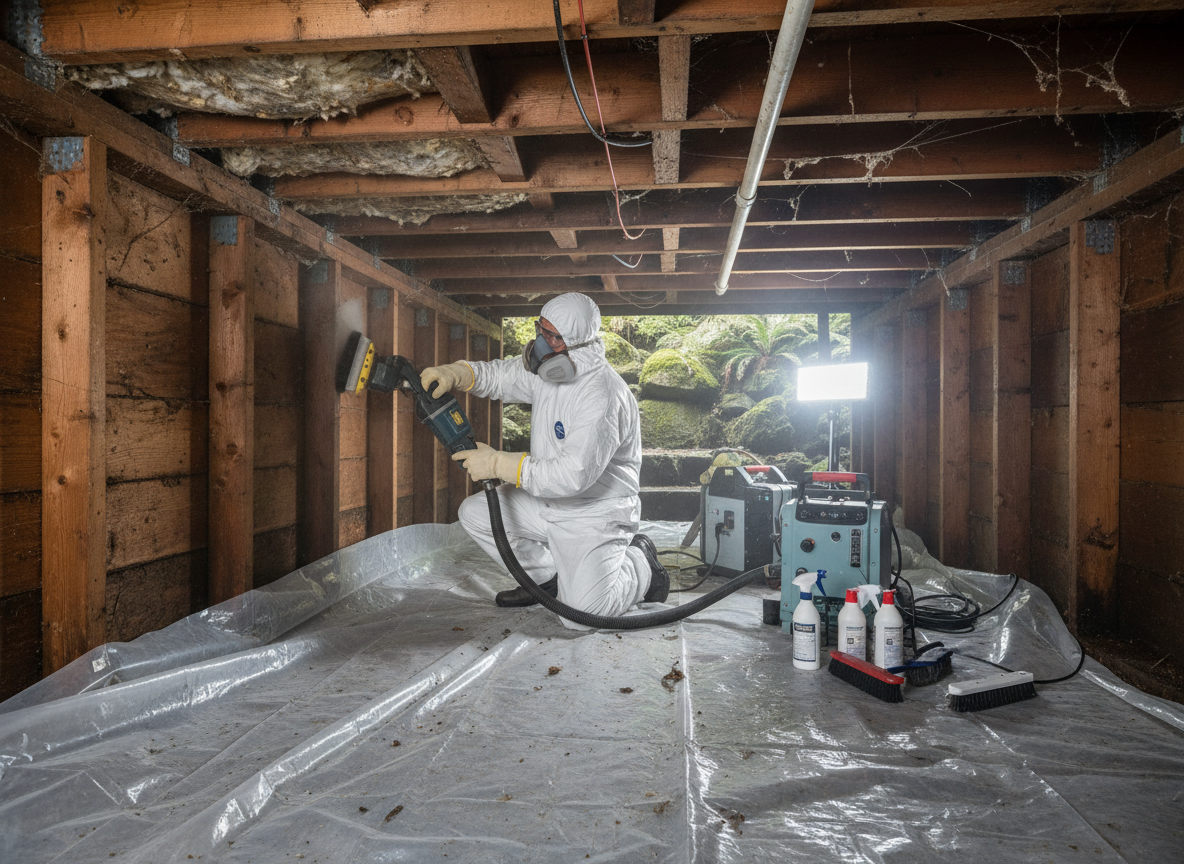
Seahurst sits on glacial till and clay soils near Puget Sound, so winter rains often push groundwater against foundation walls and into vented crawl spaces. Homes built before the 1980s typically have dirt floors, minimal vapor barriers, and only passive vents that cannot keep up with the area’s 38-plus inches of annual rainfall. Mold colonies form on joists and insulation within weeks once relative humidity stays above 60 percent, and the odor travels upward through floor registers.
Removal begins with moisture mapping and source identification rather than simple surface cleaning. Technicians isolate the crawl space, HEPA-vacuum visible growth, and remove saturated insulation that cannot be salvaged. After antimicrobial treatment, a dehumidification system runs until wood moisture content drops below 15 percent. New 6-mil vapor barrier and sealed vents are installed to cut future humidity loads common along Ambaum Boulevard and surrounding Seahurst streets.
Homeowners sometimes attempt bleach sprays or fan-only drying, but these leave roots in the wood and allow spores to recirculate through the HVAC system. King County code requires proper disposal of contaminated materials and documentation when mold affects structural members, which is why professional containment and post-remediation verification matter in this climate.
Seasonal Moisture Patterns
Heavy fall and winter storms keep crawl spaces wet longer in Seahurst than in drier inland neighborhoods. Spring inspections often reveal hidden growth that started the previous November, so scheduling removal before the next rainy season prevents repeat issues.
Technician insight
In Seahurst the thing that catches most people out with crawl space mold removal is how quickly the clay-heavy soil and frequent Sound-side rain keep humidity high even after the surface looks dry. Homeowners often seal vents thinking it will help, but that traps the moisture that already soaked the joists during the last storm cycle.
Hidden Growth After November Rains
Water seeped under the vapor barrier of a 1970s Seahurst home near 152nd Street. Inspection found active mold on floor joists and saturated fiberglass batts. Crews contained the space, removed the wet insulation, dried the structure, and installed a sealed liner. The homeowner reported no musty odor after the next heavy rain.
How it works
- 1
Moisture Assessment
Technicians inspect the crawl space from the 15202 Ambaum Blvd SW base, checking soil moisture, wood readings, and ventilation paths typical in Seahurst homes.
- 2
Containment and Removal
Plastic barriers seal the work area; affected insulation and moldy debris are bagged and removed while negative air machines run.
- 3
Drying and Treatment
Air movers and dehumidifiers bring wood moisture below 15 percent, followed by EPA-registered antimicrobial application on exposed surfaces.
- 4
Barrier Installation
A sealed vapor barrier and improved venting are added to match the persistent humidity conditions found near the Sound.
Pricing
Cost depends on square footage, depth of growth, and whether insulation must be replaced; upfront quotes are provided after inspection.