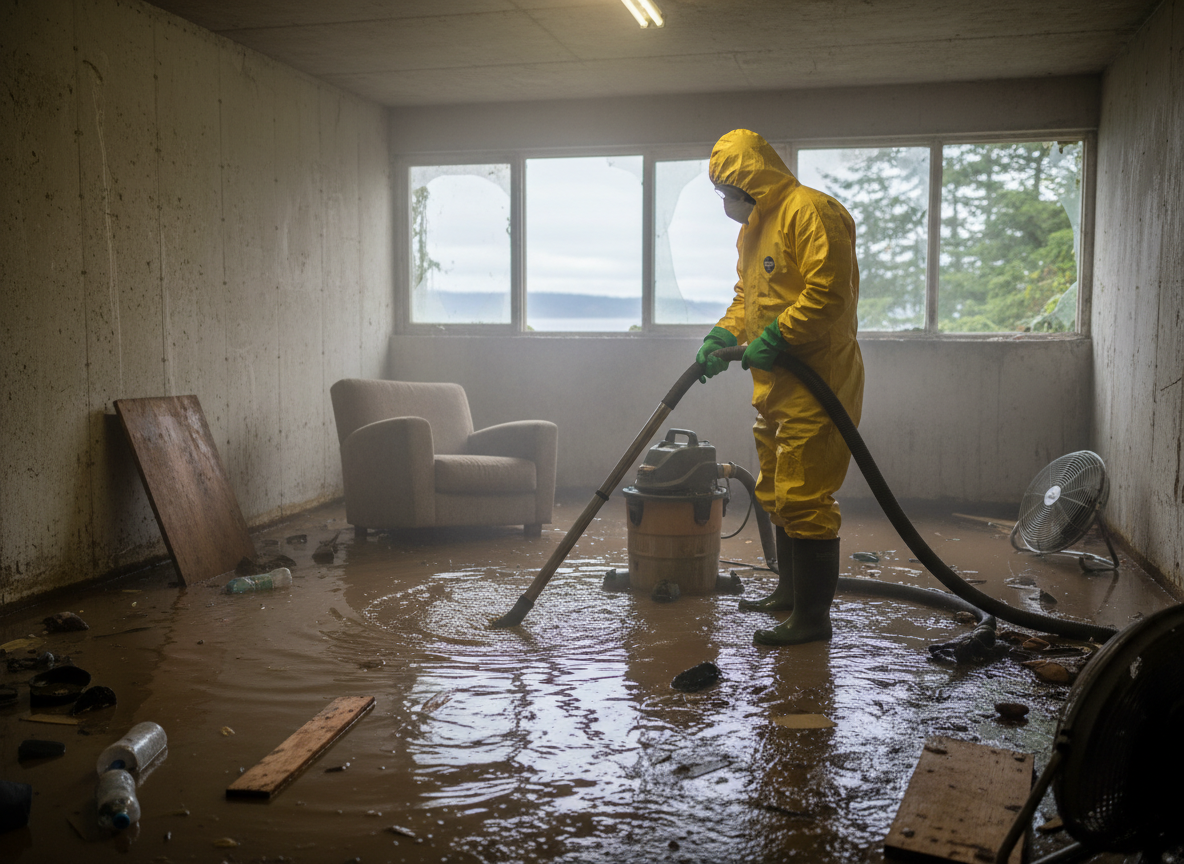
Sewage backups in Seahurst often stem from aging sewer lines in homes built before the 1970s along Ambaum Boulevard and the bluff areas. These older clay pipes crack under root intrusion or shift during wet winters, sending wastewater into basements and crawl spaces. Technicians must first isolate the source, then extract standing water while protecting unaffected rooms with plastic barriers and negative air machines to prevent cross-contamination into living areas.
King County health rules require full removal of saturated drywall, carpet, and insulation once Category 3 water contacts them. In Seahurst properties with finished lower levels, crews cut walls at least 18 inches above the water line and bag all debris for licensed disposal. Hidden pockets behind cabinets or under subfloors trap moisture, so moisture meters and infrared cameras locate every damp spot before drying begins with commercial air movers and dehumidifiers.
Puget Sound humidity keeps relative moisture high even after extraction, so drying timelines stretch longer than inland jobs. Crews monitor daily readings until levels match unaffected wood and concrete, then apply EPA-registered antimicrobials to framing and subfloors. Homeowners receive a written clearance report documenting moisture logs and photos before any reconstruction starts.
Technician insight
In Seahurst, the thing that catches most people out with sewage cleanup is the clay-heavy soil and tight crawl spaces under 1960s homes near the water; once wastewater reaches those areas, it wicks into the footings and takes twice as long to dry as the upstairs, so skipping the daily meter checks almost always leads to hidden mold later.
Septic Backup Into Finished Basement
Heavy rain overwhelmed an older septic line on a bluff property in Seahurst. Wastewater reached the finished lower level and wicked into the subfloor. Crews extracted water, removed saturated drywall and carpet, dried the joists over eight days with daily readings, and applied antimicrobials before signing off.
How it works
- 1
Emergency Assessment
Arrive on site, locate the sewage source, and map all affected materials while containing the area to stop spread into clean zones.
- 2
Water Extraction and Removal
Pump out standing wastewater, bag and haul contaminated contents, then cut and dispose of saturated drywall and flooring per local disposal rules.
- 3
Structural Drying and Antimicrobial Treatment
Place drying equipment, track moisture daily, and treat exposed framing with approved disinfectants until readings reach safe levels.
- 4
Final Clearance and Documentation
Provide moisture logs, photos, and a written report confirming the space meets health standards before any rebuild work.
Pricing
Pricing varies by volume of affected material, access difficulty in older Seahurst homes, and length of drying time required.