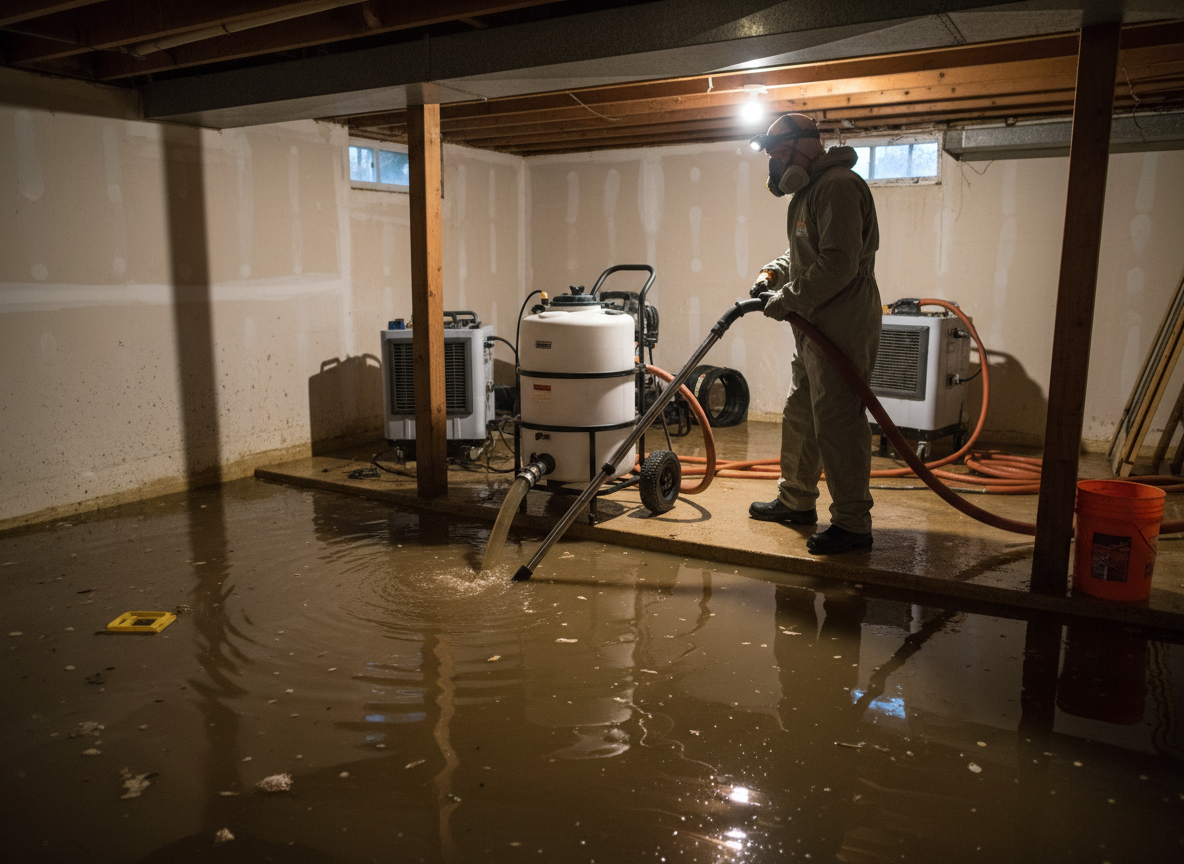
Seahurst homes built before 1980 often sit on sloped lots near Puget Sound with crawlspaces that collect runoff during the region's long rainy season. Water cleanup services here start with locating hidden saturation in joists and insulation that standard fans miss, then using moisture meters to map how far water has wicked into particleboard subfloors common in these houses. Failing to pull carpet padding within the first 24 hours frequently leads to odor issues that travel through the forced-air ducts typical in Burien tract homes.
When a main line backs up from heavy storms, the clay-heavy soil around Ambaum Boulevard slows drainage and keeps slab moisture elevated for days. Our crews cut out saturated baseboard and drill weep holes in drywall to release trapped water without removing entire walls, preserving the original plaster in many Seahurst properties. We also address the secondary condensation that forms on cold pipes once indoor humidity spikes after extraction.
Edge cases include water that travels under vinyl sheet flooring glued directly to concrete, a finish popular in 1970s Seahurst additions. Removing the flooring too soon can pull the adhesive into the slab pores, requiring extra grinding later. We document every layer removed so homeowners can show insurers exactly what was affected by the initial event versus later humidity.
Technician insight
In Seahurst, the thing that catches most people out with Water cleanup services is how winter rain funnels along the slope behind homes off 152nd and soaks the back wall of the crawlspace first. Homeowners often only notice the smell in the living room weeks later because the moisture never reaches the finished floor until the insulation is already saturated.
Crawlspace saturation after December rain
Water entered a Seahurst home through a cracked foundation vent during a multi-day storm. We found the insulation and rim joists holding several gallons along the uphill side. Extraction and targeted drying prevented mold from moving into the ductwork that ran through the same space.
How it works
- 1
On-site assessment
Technician arrives from the Burien shop, checks moisture levels in walls, floors, and crawlspaces, and identifies the water source.
- 2
Water extraction
Truck-mounted pumps and portable wands remove standing water from carpets, hardwood, and concrete slabs common in Seahurst.
- 3
Drying and monitoring
Air movers and dehumidifiers run while daily moisture readings track progress until materials return to normal levels.
- 4
Final walkthrough
Homeowner inspects all treated areas and receives a written summary of work performed.
Pricing
Upfront quote after inspection; cost depends on volume of water, affected square footage, and whether hardwood or crawlspace work is required.