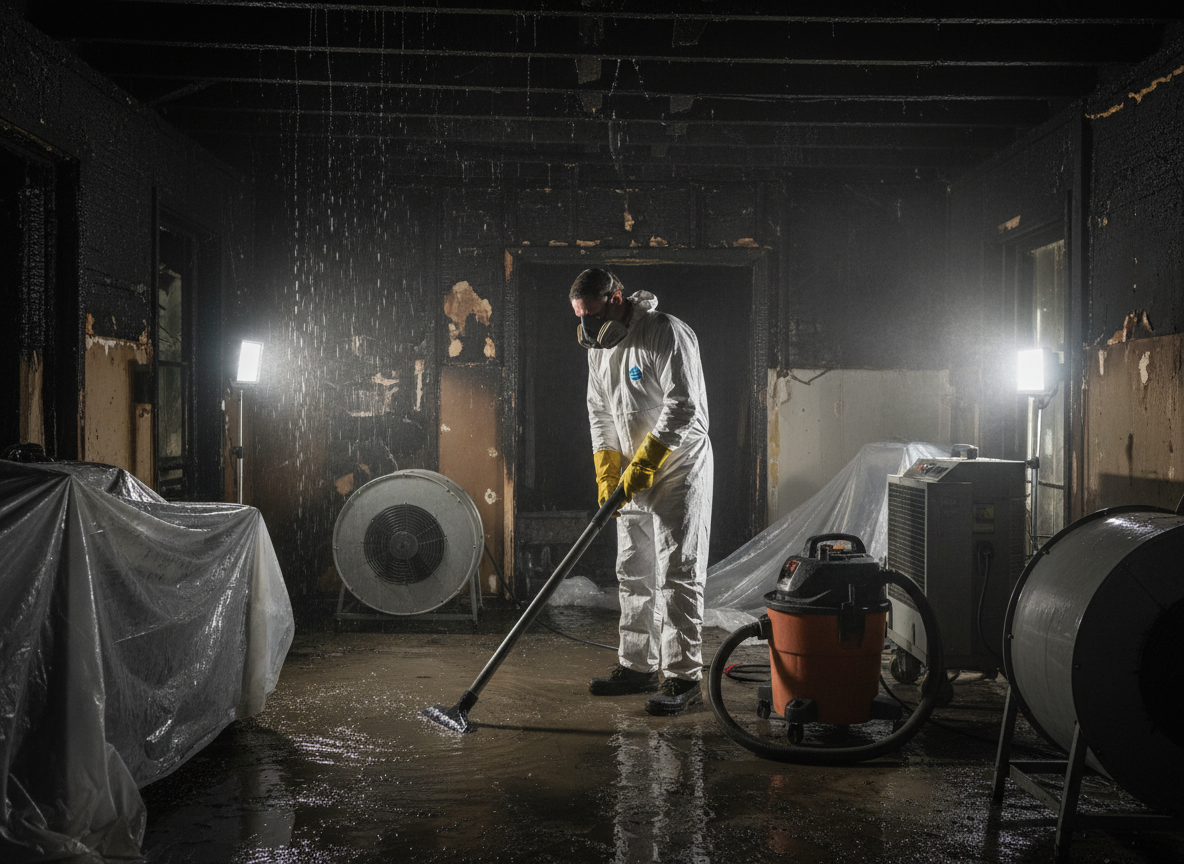
Firefighting water in Seahurst homes often carries soot and chemicals deep into wood framing and drywall, especially in the mid-century split-level houses common along SW 152nd Street and nearby Burien neighborhoods. These older builds frequently have limited access points to attics and crawlspaces, allowing hidden moisture pockets to form where smoke residue combines with standing water. Without prompt extraction, this mixture accelerates corrosion on metal components and promotes microbial growth within insulation layers that standard visual checks miss.
King County disposal rules require separating contaminated water and debris from typical flood waste, which changes how crews handle loads from Seahurst jobs. Porous materials like carpet padding and particleboard subfloors in these homes absorb the mix quickly, often needing full removal rather than drying attempts. Crews must also account for the area's frequent post-storm humidity spikes that slow evaporation rates and increase the risk of secondary odor issues traveling through shared wall cavities.
Edge cases arise when fire damage occurs near plumbing lines or electrical boxes common in Seahurst's ranch-style homes, where water can migrate along wiring runs and create shock hazards during later repairs. Proper sequencing means isolating power before extraction begins and documenting all affected zones for insurance adjusters familiar with regional claim patterns. This approach prevents callbacks that occur when residual moisture reactivates soot staining weeks after initial work.
Technician insight
In Seahurst, the thing that catches most people out with water damage remediation after fire is moisture trapped behind the original plaster walls in 1950s homes near Ambaum Blvd, where smoke particles bind with water and travel along the lath before anyone notices ceiling stains.
Seahurst Kitchen Fire Response
Suppression water from a stove fire had pooled under cabinets and migrated into the adjacent hallway. Inspection revealed saturated subfloor and soot in the HVAC return. Crews extracted the water, dried the cavities over four days, and removed affected baseboards. The home passed final moisture checks with no recurring odors.
How it works
- 1
Site Evaluation
Technicians inspect all affected levels, map water migration paths, and identify soot-laden materials in Seahurst homes before any extraction starts.
- 2
Water Removal
Industrial pumps and vacuums extract standing water and saturated debris while containing runoff to meet local disposal guidelines.
- 3
Drying and Monitoring
Air movers and dehumidifiers target hidden cavities, with daily moisture readings recorded until levels match unaffected areas of the structure.
- 4
Soot Neutralization
Specialized cleaners treat surfaces to lock down residues and prevent re-soiling during final restoration steps.
Pricing
Upfront quotes issued after on-site inspection; final cost reflects square footage, material types, and access challenges typical in Seahurst housing.