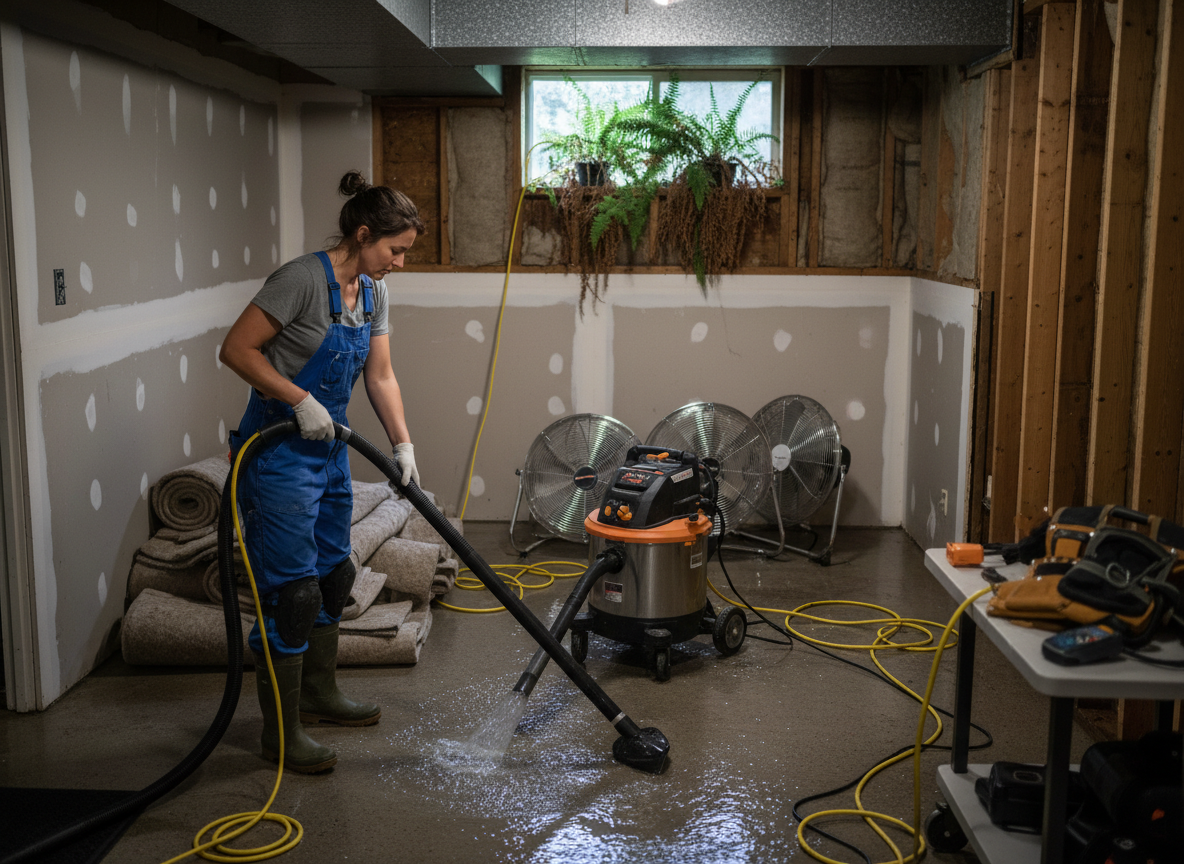
Seahurst sits in older housing stock built mostly between the 1950s and 1970s, with many single-story ramblers on crawl spaces that sit close to the water table. When a supply line fails or roof flashing lets water in, moisture travels along the slab edge and into the subfloor framing before homeowners notice. Our crews at 15202 Ambaum Blvd SW respond day or night because once the rain starts again, those hidden pockets can double in size within hours.
King County code requires full removal of wet drywall and insulation once moisture readings exceed 18 percent; we document every reading and leave the cavities open for the required drying period. In Seahurst the marine air keeps relative humidity above 70 percent for weeks at a time, so we run commercial dehumidifiers and air movers longer than inland crews would. Skipping this step is the fastest way to see black mold return behind baseboards the following spring.
Hidden Moisture Checks
We pull baseboards and drill small inspection holes in every affected room, then use thermal imaging to trace water that has wicked under vinyl or hardwood. Homeowners often miss the water that travels along the sole plate into the next room; we mark those paths on the floor so nothing is left behind.
Drying After Heavy Rain
Seahurst lots slope toward the street or toward Puget Sound, so surface water pools against foundations during winter storms. We place extraction hoses at the lowest points first, then monitor moisture in the rim joists for several days because the clay-heavy soil holds water against the concrete for weeks.
Technician insight
In Seahurst the thing that catches most people out with water damage restoration near me is how quickly water travels under the slab edge in these 1960s crawl-space homes once the winter rains start; the marine layer keeps everything damp for weeks so you have to keep equipment running longer than you expect or the subfloor never dries.
Crawl-Space Leak After Storm
A supply line under the kitchen floor leaked for several days during a wet spell. We found water had traveled along the rim joist into the living room. Extraction and drying equipment stayed in place for six days until readings dropped below 12 percent. The homeowner was able to keep the original oak floors after we removed only the wet underlayment.
How it works
- 1
Arrival and Containment
Technician arrives from Burien, sets up containment barriers, and stops the active leak source.
- 2
Moisture Mapping
We scan walls, floors, and ceilings with meters and infrared to mark every wet area in Seahurst homes.
- 3
Water Removal
High-volume pumps and wands pull standing water from carpets, pads, and hard surfaces.
- 4
Drying and Monitoring
Equipment stays in place with daily readings until all materials return to normal moisture levels.
- 5
Final Clearance
We remove equipment only after a final walkthrough and written moisture report for the homeowner.
Pricing
Upfront written quote after inspection; final price depends on square footage affected and drying time required.