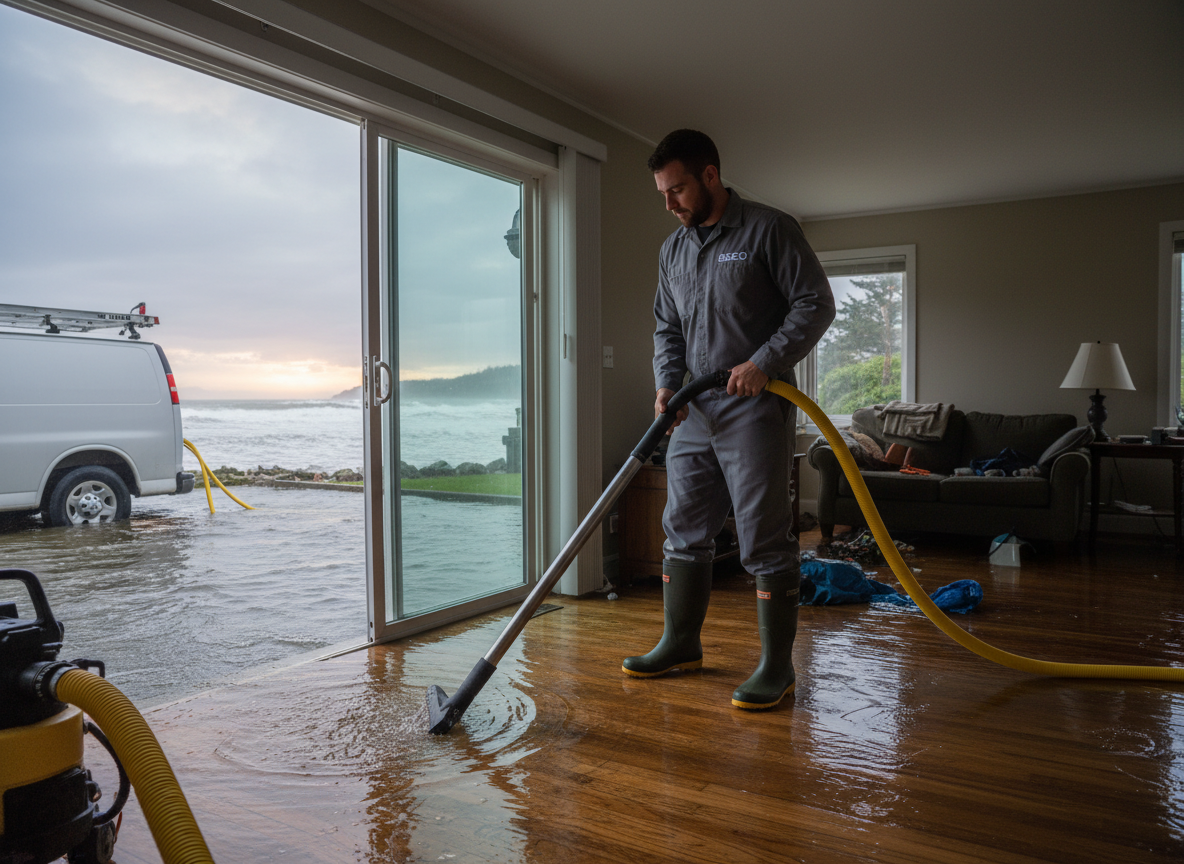
Water extraction in Seahurst homes often involves older ranch-style houses built on slabs or with crawl spaces along Ambaum Boulevard and nearby streets. These structures sit on clay-rich soils that hold moisture longer after heavy Pacific Northwest rains, so pumps and vacuums must reach underfloor areas before water migrates into wall cavities. Technicians check for hidden pockets around plumbing chases common in 1960s-1970s builds, because trapped water leads to mold within days in the region's damp winters.
Equipment choices matter on sloped lots near Seahurst Park where gravity can push water toward foundations. Submersible pumps handle deeper pooling in basements while truck-mounted extractors pull from carpet pads and hardwood in single-story homes. Crews monitor relative humidity daily since coastal air keeps moisture levels elevated, requiring dehumidifiers sized for the square footage rather than standard residential units. Edge cases include sewage-tainted water from older septic tie-ins, which demands separate containment to avoid cross-contamination with clean groundwater.
Access limitations appear frequently in Seahurst because narrow driveways and mature landscaping block equipment trailers. Teams stage at the curb on 152nd Street and run hoses through side yards, protecting existing drainage ditches that already handle stormwater runoff. Homeowners should avoid walking through affected rooms until extraction finishes, as foot traffic drives water deeper into subfloors and complicates later drying cycles.
Technician insight
In Seahurst, the thing that catches most people out with water extraction is how the clay soils around older homes near the bluff trap water under slabs, so you have to keep equipment running longer than the same job would take in Burien proper.
Kitchen Flood After Supply Line Failure
A pipe burst under a sink in a Seahurst ranch house sent water across the kitchen and into the adjacent crawl space. Extraction crews pulled several hundred gallons using portable units staged on the sloped driveway, then set drying equipment to handle residual moisture in the clay subsoil. Follow-up readings two days later confirmed the structure stayed dry without mold growth.
How it works
- 1
Initial Assessment
Technician arrives within hours, locates water source, and maps affected zones using moisture meters on Seahurst properties.
- 2
Water Removal
Pumps and extractors pull standing water from floors, carpets, and crawl spaces while containing any contaminated runoff.
- 3
Drying Setup
Air movers and dehumidifiers are positioned to address remaining moisture trapped in walls and under slabs common in local homes.
- 4
Final Verification
Readings confirm dryness levels before equipment removal, with notes on any follow-up monitoring needed due to regional humidity.
Pricing
Cost depends on water volume, access difficulty, and whether contamination is present; upfront quotes provided after inspection.