2026-10-16 ·
Inspecting Crawlspaces For Hidden Moisture In Seahurst Properties
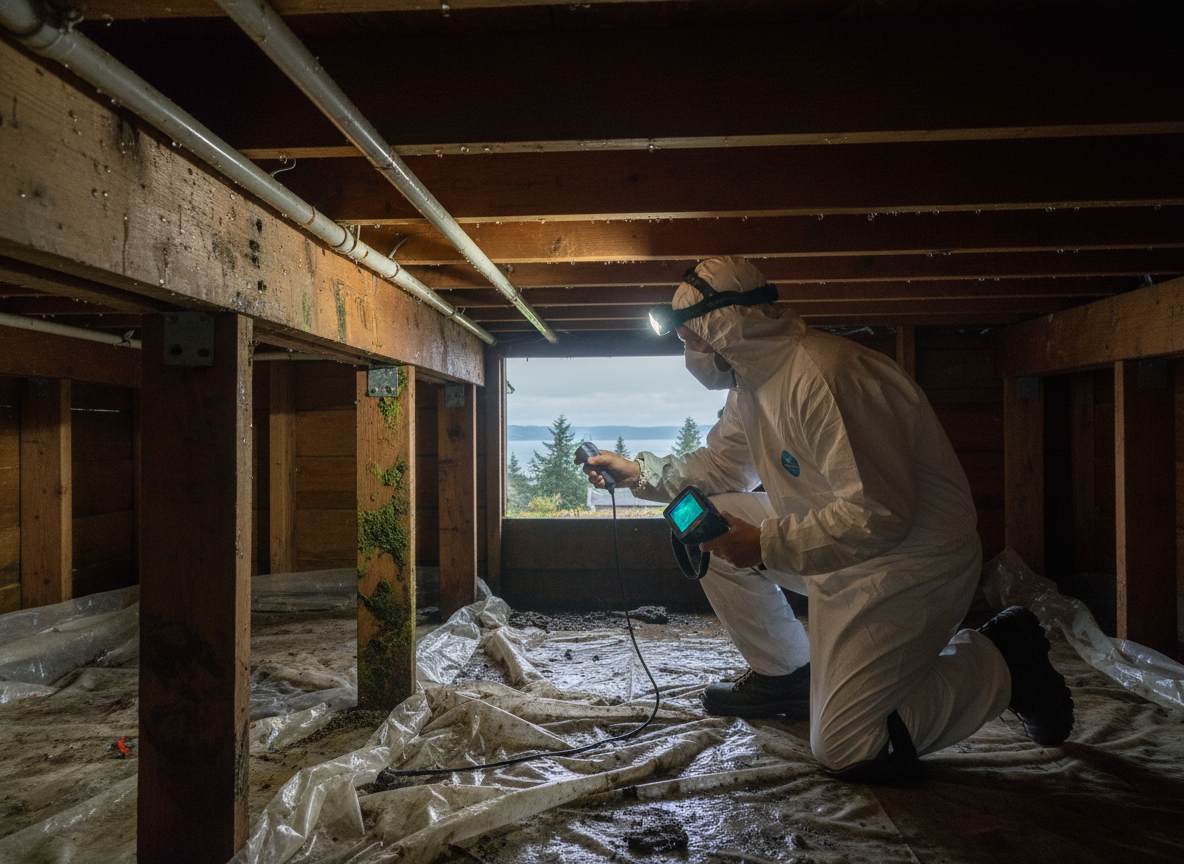
Inspecting crawlspaces for hidden moisture in Seahurst properties starts with checking under the home twice a year, right after the wettest months of November through February when King County rainfall often exceeds 5 inches per month. Older homes built before 1970 in neighborhoods around Ambaum Boulevard and near Burien frequently have vented crawlspaces with dirt floors that pull in groundwater, allowing moisture to linger on joists and insulation. Homeowners who open access panels and use a moisture meter on subfloor boards can spot readings above 16 percent before visible mold appears.
Common Moisture Sources in Seahurst Crawlspaces
Seahurst sits in a low-lying coastal zone where high water tables and seasonal rains push moisture upward through slab edges and foundation cracks. Many homes near Highline and along Des Moines Memorial Drive have original clay or concrete perimeter drains that clog with silt after decades of use, forcing water back into the crawlspace. Poor grading around the 15202 Ambaum Blvd SW area also directs roof runoff toward vent openings. Pipe leaks from galvanized supply lines in homes over 40 years old add another steady drip that soaks insulation without obvious ceiling stains upstairs. These local conditions turn a standard crawlspace into a hidden reservoir that stays damp even when the rest of the house feels dry.
Tools and Steps for Effective Inspection
Begin with a bright headlamp, digital moisture meter, and infrared camera to scan joists and rim boards without crawling the full length. Measure relative humidity at multiple points; levels above 60 percent signal ongoing evaporation from the soil. Check every 4 to 6 feet along the perimeter for soft spots in the subfloor and note any musty odor near the access door. Photograph suspect areas and record meter readings so changes can be tracked over time. After storms, repeat the process within 48 hours because saturated ground around Seahurst foundations can raise crawlspace humidity by 20 points in a single day.
Signs of Hidden Moisture to Watch For
Look for white efflorescence on concrete piers, darkened wood grain on floor joists, and sagging fiberglass batts that no longer fill the cavities. In Seahurst homes with post-and-beam construction, check the ends of girders where they meet the foundation wall; rot often starts there first. Standing water as shallow as one-quarter inch under the vapor barrier indicates a drainage failure common after heavy rain in the Normandy Park and SeaTac border zones. Musty smells that intensify when the furnace runs point to moisture being pulled into the living space through floor registers.
Preventing Further Damage After Detection
Once moisture is confirmed, improve ventilation by adding powered vents rated for 1 cubic foot per minute per 50 square feet of crawlspace and seal the dirt floor with 6-mil poly sheeting overlapped 12 inches at seams. Route downspouts at least 5 feet away from the foundation and regrade soil to slope 6 inches over the first 10 feet. For persistent issues tied to older plumbing, schedule targeted drying with professional equipment rather than relying on fans alone. Related guidance appears in Drying Out Homes After Pipe Leaks In Older Seahurst Neighborhoods and What To Do After Storm Surge Water Enters A Seahurst Home. When mold colonies exceed 10 square feet, contact specialists through crawl space mold removal services to avoid spreading spores during cleanup.